Monday, 3 February 2014


Back the the hearth; part 2 
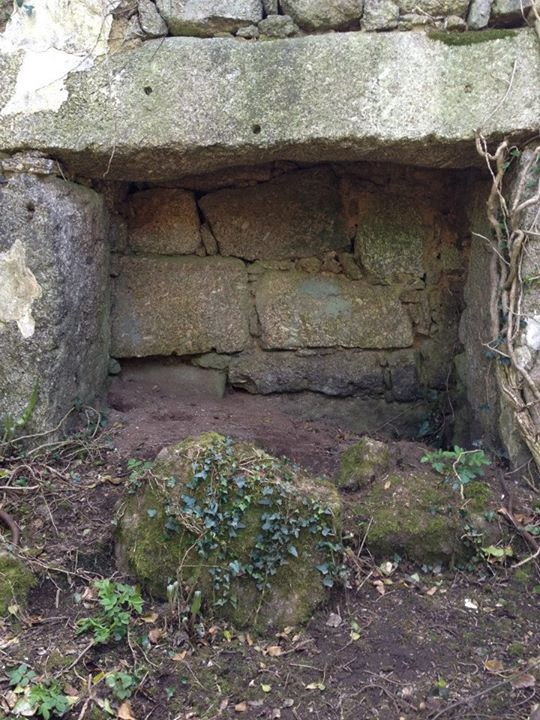

‘The Hearth became the most sacred, numinous place in the house. It lies at its centre, and is the only part that still opens to the skies.' (Roger Deakin;)
   As we have seen in part one, the hearth is a threshold, a place between the worlds, a platform which links earth with fire, and also air; a triangle of three elements right in the heart of things, the hub and the eye of the home. Then pondering these thoughts a little longer, water is taken to it, the kettle boiled, cauldron heated and those who dwell within hopefully kept alive. 
   Unfortunately, in these days of rather sterile central heating it can be difficult to have a clear understanding of  these images. What a luxury a real fire would be; what a pleasure to gaze into the flames, and glow in the warmth of the burning wood, a hearth of heat and homeliness.  I do remember having living flames in my home, and yes it was messy, however the heat and the warm glow repaid  one  many times over for the work it took to clean it out. I wish I had one, but I don’t; so how am I going to connect with the concept of the hearth as part of the female mysteries with very little opportunity to enjoy one in reality?  First of all I can make myself a model of one, then perhaps it will become easier to engage with the concepts alluded to here, but then, however pleasing to the eye this is, it is only a glimpse, somewhere to work, and not much else.  To achieve this I need to consider at greater length what a hearth is.  I can think of no better way to begin than to turn my attention to someone with greater experience than I have.
     In the book Traditional Witchcraft, A Book of Cornish Ways, Gemma Gary uncovers the hearth and places it as the 'ancient altar', the 'original sacred centre of the home.' This very hearthside is the place where charms can be 'constructed', and left on the hearth overnight to 'cook', it also appears that charms were placed up the chimney, the place linking the inside with the outside world. Strangely enough it is often single shoes (spiritual middens) that are found on little shelves, perhaps giving the modern Cinderella tale a new meaning.
   According to Gary it is via the chimney among other places, that nasty things such ‘as curses and evil spirits may seek entry.’ So charms were placed in these locations as a protection to the household. Gary states ‘Bottle charms of the pre-emptive protective kind are best housed beneath the hearth, within the chimney, beneath the threshold, for these of course are the vulnerable portals of the home'.
  The hearth stone is considered to be 'The stone', 'around which the cultus of the craft operates. In some traditional groups this is the whetstone that keeps the blade of Cunning ever sharp, but for the solitary witch any of the working stones may be used.'. Now this does of course pose me one problem, I have no chimney, so I will have to overcome this problem somehow. One way perhaps would make my altar on a windowsill, or perhaps trap the spell in a pot/bottle, and take it to the outside to take flight. I can however find myself a portable stone, to move from hearth to window.
   Loitering in Cornwall for a moment, it appears that it was right by the hearth that St Piran, the patron saint of Cornwall, "rediscovered" the smelting of tin. (the Romans knew how to do this many moons ago, but it appears those skills were lost) and thereby revealed the flag of Cornwall. The legend tells us that he was sitting by his black hearthstone, and the heat from the fire caused a white cross to appear on the top of the stone slab, it is this image we can see replicated in the Cornish flag. St Piran went on to become the patron saint of Cornwall. And the 'tin-bearing ore' provided Cornwall with one of it's means of economic survival through the centuries, in what could be a very hostile environment. An  interesting relationship appears here with something alluded to by Gemma Gary 'An old wise practice, found within the West Country and beyond, to guard the home from the entry of the black witches influence, is to cross upon the hearth the iron fire tools. A simple charm, potent in its form, its material, and location,' A cross of metal, placed on the hearth of the home invoking protection for those within.
Back to the Roots
   So after having spent a little time considering ho a hearth can be used in a magical way. It is interesting to consider why this should be so? My first port of call is the word itself.  where does our word hearth spring from?  According to Ceisiwr Serith it appears that in middle English we find the  word ‘herth,’ and in Old English ‘heorth’  both  of which appear  to stem from the Indo European root  ker,  found  in ‘k’r.d,’ which not surprisingly relates to the heart. Therefore our word hearth shoots straight from a rootstock right there in the heart.  And as we have seen this hearth became the focal place for all the family activities, pulsating  a  life force throughout  the indoor area, keeping those who dwelt there alive.  
      According to Serith this Indo-European root also runs through the Hittite hashsha which can  also apply to the  “hearth, fireplace”,  linked via the “Sanskrit asa” which when translated means “ashes.’ (Polome, 1982, p. 392) [quoted in Serith]. And then from the ashes,  we can see   the ‘Latin ara’ or ‘altar’ So it appears that there is  a  linguistic link between this family place in the home, and a place of worship, which is rooted right there in the ashes of the hearth.
   It appears that the household hearths in the dwellings of Ancient Rome had their own special brand of spirit that resided  there. This spirit, called 'The Lars' was said to haunt the hearth-side, a Genius Loci living alongside  humans. This spirit may have also been a guardian of boundaries, especially those found within the home, so what better place to reside other than this ,portal between the worlds? 
   Interestingly, it is also suggested by Angella Della Volpe, as quoted in Serith that  "an individual household ... can be defined as a group worshipping at the same hearth. (p. 83, n. 15) this definition, is endorsed in the Rig Veda; where it says “Let us pray with a good fire” (Rig Veda 1.26.9)
  So we have two things here, one a central place for those who dwell in the home, a place of comforts and substance, and two, a place of worship. And then these  two may appear as interdependant, linked by the dependence on the fire to maintain life itself.
    In my lifetime I can engage with phrases such as "driven from hearth and home"  meaning that one is cut off from the comforts of one's home kith and kin. And the soldiers fighting in the in the Second World War were spoken of as "fighting in defense of their firesides" the place that represented home, and the freedoms and comforts therein. To 'keep the home fires burning' indicated keeping the hope of comfort alive, and the welcome it represented.
     The importance of the hearth in the home takes on even more import when it is taken into consideration   that   in times past, a lit fire in the hearth indicated   possession of a home; ‘In Welsh law a squatter gained possession of land only when a fire had been lit on his hearth and smoke come from the chimney (Owen, p. 339 in Serith).’ And amazingly it seems that ‘The association between ownership and the fire was so strong that the right of a Welsh heir to occupy his father's land was called "the right to uncover the fire" (Rees & Amp; Rees, p. 157)[In Serith].
     Even today Aboriginal hunter gatherers still make a fire each time they settle, even in the heat of their climate. This fire indicates this is their tribe’s space, and this then becomes the place for the group’s social and religious activities. They; like the wartime British, still keep the home fires burning, (albeit outside) and have been known to take a fire torch to another community to help start their fire. And from that thought it takes no small leap to see the importance of the torch of fire in the Olympics.  Building a community of those included. All of this allows us to see the importance of fire lighting, and fire sharing as a pivotal point at the centre of belonging of the tribe.
     Serith points out   that under Vedic law, any ‘new territory was legally incorporated with the construction of an altar to the fire god Agni.’ Agni is a Hindu god whose  name literally means  “fire”, and therefore linguistically, we do not need to take  very  big stride to see how the and a link between Agnis and he Latin word   ignis,  and that spark of fire that lights the greater mass.
  Loitering with Agni for a bit, it is interesting to remember that he is considered to be a messenger, a male deity who intercedes to and from the other gods. He is said to be 'ever-young, because the fire is re-lit every day' it is this relighting of the fire that ensures his immortality. (Wikipedia)
   The Wikipedia entry goes onto indicate that 'In Newar, Tibetan and Japanese Buddhism, he is lokapãla guarding the Southeast’. The entry goes on to indicate that in ‘the Tibetan text Jigten lugs kyi bstan bcos it says’ “Make your hearth in the southeast corner of the house, which is the quarter of Agni.”(ibid) I can’t help but remember those feng shui books I used to read many moons  ago, that  it was suggested that the fire should be in the south east area of the room,   now I can see how that also perfect sense.
   Still spending time away from my native shores, I want to turn my gaze toward the heart of the Roman Empire, to one of the most famous of all hearths, that of the temple of the virgin goddess Vesta and her ‘home fire’, which was kept forever burning. This fire was tended by those famous Vestal Virgins, serving Rome, and their goddess in their unusually round temple. (Many other temples in Rome were square)   Not only was this fire no allowed to go out; but if it did, it was considered a serious crime; the guilty virgin was ‘scourged’ by the pontifex maximus.  
  When we consider the things learnt already about the importance of keeping the fire alive, it is hardly surprising that this was considered such a crime. And then if this wasn’t daunting enough to put anyone off being in the service of Vesta, if those maids who tended the fire lost their virginity, and could no longer claim the veil of virgin attendant, they were put to death in rather a nasty way; they would be interned alive in a tomb and left for dead.
  So it was that the Vestal Virgins belonged to the heart they trended. In this case the hearth of these virgins belonged Rome itself, and no other. Interestingly this fire, if allowed to go out, was relit by friction, and not by any other flame near bye. it was by this manner kept pure, it belonged to no one else. However bleak the existence of these virgins appears to us, it seems their dedication did no go unrewarded. Pliny indicates that these virgin fire tenders appeared to be endowed with certain magical powers as a reward for their service.
   And then  not too far away from Rome, in the world of the ancient Greek, we find the goddess Hestia, also a virgin goddess of the hearth, and of architecture. She claimed the duty of bringing order to both the home and the state. Knowing what we now know about the importance of the hearth, it is not difficult to see the connection. 
   As a daughter of Cronus (the cutter) and Rhea (mother of the gods, whose name appears to link the 'ground' with 'flow' and 'discharge') Hestia received the first and last offering of every household. And it was from her fire, that other fires were lit. In her temple, also round, 'the eternal fires of Hesta were tended,' and this duty was undertaken 'by widows past the age of marriage'. (Serif [Plutarch, Numa, IX]) Or perhaps it was just that these women were more experienced older women, those women would have built their own home fires, and knew how to keep these home fires burning, and were not likely to be distracted as a virgin may be, However it was Hestia herself who held onto her virgin status, and not her tenders, and this, it appears, was despite the attention of both Poseidon and Apollo.
    And then nearer to home, leaping across to the famous fire of Bighid of Kildare we find an example of another virgin-tended hearth. Gerald of Wales, Giraldus Cambrensis and other writers describe this hearth as 'a fire surrounded by a hedge'. this hedge could be crossed by no man. I am presuming that this fire must have been undercover. Just imagine how difficult it would have been to keep a fire burning, outside and in a country not known for its arid weather conditions. Now unlike Hestia and Vesta, this fire belonged to a mother of one child, again this  fire was attended to by virgins. This time we call them nuns.
Serith points out that;
'Kildare is not far from Uisneach and Tara, the religious and political centes of Ireland,
forming an equilateral triangle with them. By the time the existence of the fire is recorded
the virgins are nuns, ("brides of Christ") and Brighid is a saint, but their Pagan origins are 
assured by the temple of "Minerva" (like Brighid a craft goddess) in 3rd century Britain
                which also had an eternal flame.'(Puhvel, 1987, p 174)'
     Many interesting links spring to mind here, if we think of Brighid we are never far away from smith craft, which leads us back  to the fire. Along with fire we think of candles back there in the home. And then she is also commonly associated with thresholds, which links back to the Lars that we met earlier, which takes us back to that homely hearth of the family.  And then in her fiery role my imagination can't  help but draw similarities with the Shekinah, the light and bride of God.
    However, moving back across to those warmer drier climes, it seems that in both Roman and Vedic public rituals there was more than one sacred fire.
 'The main fire was on a square altar, the ara, which stood in front of each temple. This was the one into which the main offerings were made. Next to it was another fire, in a round metal tripod, into which was offered incense and wine at the beginnings of  sacrifices. These were the standard offerings in the domestic cult, and this fire may therefore be identified with the domestic hearth.' (Dumezil, pp, 314 -15) [Serith] 
This domestic hearth, as opposed to the grand fires we have been examining recently, 'received offerings to family deities and ancestors.' 'Although the family priest ( the pater ) might be male, the fire tender was female.' (ibid)
    Serith goes onto suggest that in Vedic tradition; 
     'The domestic hearth is certainly the primary of the two. The garhapatya is lit from the sacrificer's  own heart. If the other two fires go out, they may be relit from the garhapatya if it goes out, the entir  ahavaniya (including the ashes) must be moved to the garahapatya's place before the ritual can continue'. (Aitareya Brahmana 7.5, in Keith, 1998, p. 292)'  (ibid)
   So the lighting of the fire had to be done from scratch,not from pinching flame from elsewhere. And it is interesting to note that this needed more than physical strength and commitment but as we say, one needed to 'put one's heart into it.'. We have already seen that the Virgins of Vesta lit there fire by 'friction' or in my opinion, a great deal of effort. So the lighting of the home fires, that fire right there  in the hearth, stems right from the heart, and is kept alive by the dedication of the one tending it.
  Then when I take a little time to continue with these thoughts, not so long ago a married woman was considered to be bound to her husband, and as a sign of this she would dutifully tend her husband's hearth. The wife and mother, although taking up a place that modern day women may cringe to ponder, still had that place of charm making.
   Having returned from my own journey, and settled myself back in my own hearth. I look back to the pages that kindled this journey in the first place, Words penned by Shani Oates, Maid of the Clan of Tubal Cain in her book The Star Crossed Serpent 11.
     'Within earlier Paleolithic societies, recumbent stones deemed to be Her body, personified in the earthen alter in the fullest sense. These continue to serve as the central focus of many dwellings as hearthstones. Charged within the 'Old Covenant.' the Maid as 'bride' of the Old Horn King represented by the hearthstone, binding her spirit to His to the Stang she holds, transmitting its virtue to her Clan, a cohesive unit for its survival and continuity. In this manner. 'The House That Jack Built' through the son/Sun, embodied  within the figure of the Maid as refuge for the Egregoric spirit.' (p83)
Again according to Oates
‘In the Neolithic world She had been a stone block, a throne mount to represent the bond between Man and Creatrix. Her presence was one that enthroned and enveloped the Monarch within Her status.’
  So I have been round the world and returned to the stone slab of my hearth, no literal fire burns here at the moment, but the fire that burns here is in my heart, lit by dedication and hard work.
Sources
Bayley,H. The Lost Language of Symbolism Volume 1 (1912) http://archive.org/details/lostlanguageofsy01bayl
Bettleheim, B (1927,[1977]) The Uses of Enchantment, The Meaning and Importance of Fairy Tales. Vintage Books, USA
Burke, C. S (1913[1995]) The Handbook of Folklore; Senate, The Guernsey Press Co Ltd, Guernsey.
Deakin, R ( 2008 ) Wildwood, Penguin, London
Gary, G (2008) Traditional Witchcraft, A Cornish Book of  Ways, Troy Books, London
Gary, G (2011) The Black Toad, Troy Books, London.
Gray,W.G. (1997) Qabalistic Concepts, The Living Tree, Weiser Books, Boston.
Oates, S (2012) Star Crossed Serpent. Vol 11 Mandrake of Oxford
Serith, C ‘The Prot-Indo-European Hearth; http://www.adf.org/articles/cosmology/pie-hearth.html
Warner, M (1995) From the Beast to the Blonde, On Fairy Tales and Their Tellers, Vintage UK, London


Monday, 16 December 2013

The Hearth (part one)


The Hearth (part one)


‘I really do want people to come home to a real fire. A nation without the flames of
a fire in the hearth, and birds singing outside the open window, has lost its soul.
To have an ancient carboniferous forest brought to life at the centre of your home, its flames budding and shooting up like young trees, is a work of magic.’

 (Roger Deakin 2008)

      Oh how I wish Roger Deakin’s words could come true, and we could all have a real fire, a fire to warm oneself by and watch the flames licking each other and rising and falling amidst the dark of the chimney breast. Yet the majority of us are not of the lucky few with access to such ‘works of magic’. However, recently I set myself the task of spending some time looking into the meaning of the female mysteries. As this seed took root, a good place to start my adventure appeared to be right there in the hearth. And although lacking the luxury of a real fire my investigation uncovered many treasures hidden in its recesses; and many wonders came to light as I dug a little deeper than the surface soot. Without too much effort I could begin to understand what it means to engage with this place that is positioned somewhere in the room, and yet is also open to the sky via the chimney. It was, and can be at the hub of domestic activities, and as we will find out, activities between the realms. This place of fire has been a site of worship sustenance and warmth, a radiant hub of social religious and family activities throughout the ages, and a central position of all the activities going on within the home.
      As the dictionary definitions suggest, the hearth can be ‘an open recess in a wall at the base of a chimney where a fire can be built;’ as such it is ‘part of the fireplace’ which in contemporary settings is ‘usually paved and extending out into a room.’ And as one conjures up this image, one can’t help but notice the hearths connection with the chimney, which pushes its way up to the heavens, connecting the living or working area with the territory beyond. This passageway releases the smoke from the fire, along with any charms, spells and spirits in the charge of the practitioner working at the hearth. As I sit here in the rather sterile heat of this central heated home; I can’t help but evoke my childhood memories of those Disney-like film images, as the magic pops out of the chimney in regular puffs and gives away the goings-on below.
      Whilst I loiter for a while with my childhood memories and images; a figure appears. This fellow is a rather portly gentleman, clothed all in red, with white hair and beard, which gives the appearance that he is as old as time itself, this gentleman is known to many as Father Christmas, a great hero of children throughout the ages. This fire red figure is accompanied by elf–like helpers who listen at the chimney to ascertain whether the children below are well behaved or not; bringing gifts to those who fit that perfect child ideal wished for by every parent. Imagine being bypassed by Santa Claus, a terrible fear that kept many-child walking along the straight track. This gentleman was so important to me as a child that when we moved to a new place, with boarded-up chimney breasts and a clean gas fire my thoughts overflowed with fearful confusion; how on earth would He be able to leave me my much desired; and may I add, much deserved presents? But my parents; as parents do; had an answer; ‘Do not worry dear, we will leave the back door unlocked.’ So I left out the carrots for the reindeer, and a bit of mums homemade cake for gift bringer, and a little drop of her homemade wine, and went off to bed. (It’s amazing to think how a life of cake and wine offering started so early on in my development) However I was still left a little worried as to whether He would be bothered to clamber down off the roof, and find his way to my waiting stocking, not even considering for one moment that it may be a lot easier to enter by the backdoor, rather than a rather portly gentleman climbing down the very narrow chimney. (Strange how a child’s mind easily accepts such things) Now to return to the point, and avoiding any further self indulgent fireside tale telling, I will get back on track, albeit still loitering for a moment in the company of Father Christmas.
      Before I leave him to enjoy his cake and wine, I would like to consider his famous cry of ‘yoh hoh hoh’, which I can’t help but connect with ‘IO HO’ as referred to by William G. Gray; the “mighty shout of laughter” ‘said to accompany creation (the big bang)’ of chokmah. According to Gray ‘IO HO’ is another form of ‘IHVH’ ‘possibly man’s oldest name for God’, a very masculine form of consciousness, right up that tree, or perhaps up the chimney.
      Still warming myself in the embers of my infant memories I see another childhood figure, this time a female one, Cinderella, There she is sitting by the hearth, taking up her imposed position of sleeping amongst the cinders fetching the water and tending the fire. This tales appears to have little seedlings all round the world, shooing from a parent plant that appears to have originated in China. However the tale we know so well, as with many of our childhood favourites, has an interesting version amongst the collection put together by the brothers Grimm. Aschenputtell (Ashputtel, 1812) which translates as ‘Cinder fool’ unfolds the familiar theme of a wealthy gentleman, whose wife dies and leaves behind one daughter. He then takes for himself a second wife who already has two daughters of her own. They were very pretty, but not very nice young ladies, ugly on the inside in fact. These two ugly sisters gave all the most unwanted jobs to the first pretty, very well behaved first wife’s daughter. (Another link with good behaviour and the chimney) It was these ugly sisters that gave this young lady the name of “Cinder-fool”. I know I am roaming from the point somewhat, but I find this all rather interesting. In the Grimm’s version, It appears that her father set off on a journey, bringing back the requested ‘fine clothes, pearls and diamonds’ for the sisters, and as he rode through a copse, ‘a hazel twig brushed against him and almost pushed off his hat: so he broke off and brought it away; and when he got home he gave it to his daughter. Then she took it and went to her mother’s grave and planted it there, and cried so much that it was watered with her tears; and there it grew and became a fine tree. Three times every day she went to it and cried; and soon a little bird came and built is nest upon the tree and talked with her, and watched over her, and brought her whatever she wished for.’ A tree with gifts, well I never!
      Interestingly according to Harold Bayley ‘Cinderella variants-form the foundation of nearly half the world’s fairy tales;’ He links the version of the tale that we are rather more familiar with where Cinderella gains beautiful robes and then is deprived of them with Ishtar, who is also ‘deprived of her beautiful robes’ due to her ‘descent into the under-world.’ In fact According to Bayley changing of clothing appears to be one common thread in the 345 variants of this tale collected by the Folklore society, in 1893. The version of this tale which has become the most commonly repeated came from France towards the end of the seventeenth century.
      It appears that even Martin Luther took up the position of the downtrodden in the cinders and used the thread in his Table Talks, however here he refers to the “Aschenbrüdel, the ash-brother, whose place in the family becomes suppressed by his brothers. (Bettleheim) And amongst these so called ‘ash-brothers’ we find Joseph of the many-coloured coat fame. So although I have roamed; we can see how the hearth also took on a position to represent oppression, and the following rise to glory of the underdog. It is easy to see how life at the hearth was very difficult, dirty and not the choice of many. A job to be given to others, to the underdog, yet on the other hand when we consider the lot of those who work there, the long term benefits are the rewards in the end.

Tuesday, 23 July 2013

Changing times.

Another long silence, and our longest yet, nearly a year! This does not mean that we have been inactive however, far from it. In fact there have been times when we have been working quite intensely but have found little to say about it, we never wanted to write this blog just for the sake of it.
One thing has very definitely changed, we have always been just the two of us and now we have  a friend who wants to work with us on a regular basis, so maybe our little clan is about to start growing. It does seem to be the right time for this to happen For a long time it was necessary for us to just work as the two of us. Although we both had quite a lot of experience of various fields of "occult" work, what gradually evolved into the Clan of the Entangled Thicket was a slow process of experiment and growth. We pushed forward into new territories and then reached back into tradition. Every year was different and the seasonal workings were often almost unrecognisable from one year to the next.
So now, as the year turns, things change again and can never be the same. Some friends will know that I recently moved house and that is also quite a drastic change that reflects the changes we have undergone in the clan work. We find ourselves more often in the woods, we have found several sites for working and with each change the possibilities become richer and just wait to be realised.
Another major development for us was contributing to the anthology Serpent Songs, published by Scarlet Imprint: http://www.scarletimprint.com/serpentsongs.html and even if we were not in this book we'd say it is a fascinating and rich volume. I will try to write a proper review very soon. There are some very personal pieces there, some are more philosophicl and some are fascinating historical essays. We were especially glad to see our friend Richard Parkinson in print at last. We hope to see much more from him before too long.
We also hope that you will want to see more from us soon and that we will not disappoint! I think we have quite a lot to say, so we just have to remember to say it.

Wednesday, 8 August 2012

The Sacrificial King


Whilst contemplating the harvest, and the implications to our Clan Mythos, I came across something interesting in a little book  examining the Pyramid Texts of  Sixth Dynasty  (2350- 2250 BC) ancient Egypt and the Coffin Texts of the following period.

It appears that in the Coffin text no 330 Osiris is depicted in his role as an agricultural deity, and in this extract he is seen  identifying  with the grain:

‘Whether I live or die I am Osiris
I enter in and reappear through you,
I decay in you, I grow in you,
I fall in you, I fall upon my side.
The gods are living in me, for I live and grow in the corn that sustains the honoured ones,
I cover the earth,
Whether I live or die I am barley,
I am not destroyed,
I have entered the Order,
I become master of the Order,
I emerge in the Order,
I make my form distinct,
I am the Lord of Chennet (Granary  of Memphis?).
I have entered into the Order,
I have reached it limits.........’

 Osiris had a direct relationship with the grain, and as the people’s relationship with the grain was aslso paramount, a relationship was undoubtedly forged also with the people. In fact Lewis Spence states that Osiris ‘was the culture-deity who introduced corn into Egypt.’  He also states that  ‘A representation of him at the temple of Philæ depicts corn-stalks growing out of his dead body – the body of Osiris (the grain) is torn to pieces, scattered through the land, and the  pieces  buried (or planted) in the earth, and the corn sprouts from it.’ This appears as an apparently   violent but temporary termination of this form   of divine life. The coffin texts support this, pointing to the custom  of preparing a figure of Osiris as a mummy from a linen bag which was then stuffed with corn. When this was watered, the corn would sprout through the meshes of the bag so that the god was seen to grow. Such a custom probably underlines a Coffin Text called “Spell for becoming barley”:

I am the plant of life
Which comes forth from Osiris,
Which grows from the ribs of Osiris,
Which allows the people to live,
Which makes the gods divine,
Which spiritualized the spirits
Which sustains the masters of wealth, and the masters of substance,
Which makes the pak cakes for the spirits,
Which enlivens the living,
Which strengthens the limbs of the living,
I live as corn, the life of the living,
I .... upon the rib of Geb (the earth)
But the love of me is in the sky, on earth and on the water and in the fields.
Now Isis is content for her [son} Horus, her god,
She is jubilant in him, her Horus, her god,
I am life appearing from Osiris.

What is also interesting, returning to text 330 which states ‘I decay in you, I grow in you,’  which appears to point to a direct relationship between deity, people and the grain, and therefore it appears that  partaking  of this offering one would share in the fate of the sacrificial king also. This ritual it appears was an important aspect of the relationship of the people, with the land and also deity. So via  this ritual  access was gained to the magic that ensured the repetition of this important aspect of survival year after year. And the blessing of their gods.

Contemplating the relationship that the people had with their mythology, one can't but help remember the weeping women of Biblical fame, condemned by Ezekiel for their lamentations for another agricultural deity, this time of Babylonian fame, This god also departed with the dying vegetation, and foregrounds, in this verse the importance of really engaging with the emotions brought about by the death of the god of the grain.

Ezekiel 8v14 states; 'Then he brought me to the entrance, to the north gate of the house of the Lord, and I saw women sitting there mourning for Tammuz' (New International Version) Here these women appear to be bringing the god's death, into the realm of experience by their weeping and wailing. 

According to Lewis Spence ‘Tammuz himself was cruelly disposed of by his lord, who “ground his bones in a mill, and scattered them to the wind” plainly a treatment meted out to the corn.’  Sounds familiar doesn’t it? Spence goes onto say that, ‘An Arabic writer relates that Tammuz was cruelly killed several times, but that he always came back to life again,’   Now I am sure you can see where I am heading! of course, Robert Burns tale of John Barleycorn, which is resurrected, and sung by many at this time of year.

I am not alone in seeing the relationship between the  Tammuz myth and John Barleycorn,  according to Spence, ‘Sir James Frazer brings forward the theory that the “Lamentation” of the ancient Babylonians were intended not as mourning for the decay of the vegetation, but to bewail the cruel treatment of the grain at harvest-time, and cites in this the connection the ballad of John Barleycorn, which we are told was based on an early English poem, probably itself of mythological origin.’  So, as with many a mythos, this one is many layered. Not only had this ritual to do with the survival of the people via the grain, and the re-appearance of the grain the following year, rooted in the death of the grain the year before. But also that these observances had a foot in the affairs of the people at the time  to give these observances  extra weight and import.

Returning again to the shores of the Nile, it does appear that Osiris ‘was generalized; he was all forms of growth. And on the other hand he was also a king, and was usually represented with the insignia of royalty. The king was mediator between the community and the sources of divine power.’ So we can see here how the king, and the sacrifice join hands. And then the sacrifice links king and people.

In chapter 175 of the book of the dead, we find a conversation between Osiris and the High God, here called Atum. Osiris finds himself in the underworld, and calls to Atum.
                        ‘Osirus    O Atum! What is this desert place I have come?
It has no water, it has no air,
It is depth unfathomable; it is black as the night.
I wander helplessly herein.
   Atum       You may live in peace of heart. I have provided illumination in place of                                                               water and air, and satisfaction and quiet in the place of bread and beer.                   
Thus spoke  Atum.
                       Osiris,   But shall I behold your face?
                       Atum I will not allow you to suffer sorrow
                       Osiris But every other god ha a place in the Boat of a Million of year.
                       Atum Your place now belongs to your son Horus.

The reason I am highlighting that portion of text is it wonderfully  highlights the need for things to move forward. The king hands over the sovereignty to his son, it is time for change. So as the sacrifice has  been put into place for the survival of the people, it appears that a ‘place’ has to be made for a successor. So the old king has to stand aside and let the new king take his place.
The text goes onto point to a discussion concerning the ordering of the universe.  The old power must give way to the younger, Osiris begs to see his son, but that is denied him.

Now I cannot help but think again of Sir James Frazer, and his sacrificial king, the king who lays down his life for the sake of his people.  According to the Wikipedia article; ‘This King was the incarnation of a dying and reviving god, a solar deity who underwent a mystic marriage to a goddess of the Earth, who died at the harvest, and was reincarnated in the spring. Frazer claims that this legend is central to almost all of the world’s mythologies. This sacrifice so that many can live of course also resonates with the tale of Jesus, still observed by many on a yearly basis.  

 So it is without a doubt that we find that time spent in the underworld by the god or goddess of agriculture, underscoring the dark months of the year appeared as a perennial observance by many of our ancestors.  However in an age when our lives do not depend on the return of the god or goddess from Hades,  Sheol,  or the underworld how do these mythologies fit into a contemporary setting?  It appears that as many of these tales are of a composite nature, fitting into the needs of the people of the time, we can therefore see how these can fit into a contemporary setting.

 So as on a personal level, my life does not depend upon the grain’s survival at this time in the history of mankind in such a direct way. Nor do I look, in the same way, at the grain, although as John Barleycorn shows, how great the many manifestations of the grain can be. Yet my personal health and wellbeing does depend on the way I deal with the light and dark half of the year. And an appreciation of the constant never ending cycle from death to life again is inescapable. Therefore  to make way for new, old ways need to die, and all the time we cling onto something that once was, we cannot re-germinate, and produce a new, inspirational younger in heart and mind being. Knowing that from the old king, springs a new one, from the old grain, germinates the new, and the old sun will be born again after it lets the earth rest and re-coup after its winters sleep.  So even though my connection with these observances may have taken another turning, the same need to observe changes remains. And by these connections, my life today is enriched.

Spence, L (1916, MCMXVI ) Myths & Legends of Babylonia & Assyria, George G. Harrap & Company, London.
Rundle Clark R. T (1959) Myth and Symbol In Ancient Egypt, Thames and Hudson, London


Monday, 18 June 2012

Mythos - part 1.

The recent publication of Shani Oates' The people of Goda gives an unprecedented insight into the mythos of the Clan of Tubal Cain. This led me to consider just what the mythos of 1734 and especially of The Clan of the Entangled Thicket is, and should be. This has been a fairly constant theme of exploration over the last 14 years, and one that develops and transforms with each twist and turn of Fate and with each piece of additional knowledge.

It is inevitable that our mythos should relate to that of the Clan of Tubal Cain and it is also inevitable that it should differ in some ways. This is not only ok, but necessary as we are not dealing here with a monolithic and static received notion of truth, but a dynamic search for truth and for that elusive victory over Fate.

It is the last point that is the core of the mythos after all, the journey of the hero (gender-neutral, hero or heroine) to a place where they achieve freedom from the shackles of Fate. The rest of the mythos is the spelling out of this. There are many cycles of myth and each has many levels. Simple agricultural cycles reveal glimpses of mystical insight, stories from different cultres throw light on each other and thus illuminated return us, to the central myth.

Almost inevitably, the hero at some time succumbs to hubris or to simple stupidity, and suffers at the hands of Fate, but this may be only in order to become purified and to return to their quest with new strength. The real transformation comes, not when the hero claims control of his or her fate, that would indeed be hubris, but when they claim responsibility for it, and thus turn their back on mechanical living and choose instead to develop their awareness. This is the real beginning of the adventure.

Monday, 11 June 2012

Cleavers


 Earlier in the year my attention turned to these little lovelies, trying desperately  to grab (literally) my attention. I now find they have well and truly clambered climbed and cleaved, as the end photo taken yesterday 10th June2010 illustrates. (I hope!), I thought I  would post my notes, and photo from way back in March.
 As I roamed the local footpaths and the riverside picking nettles for soup, I couldn’t help but notice the tasty looking young cleaver leaves that appeared very healthy young specimens nestling amongst the wayside flora.  ‘Can I eat them?’ was the question I asked myself. Better go find out.
    This common cleaver, or ‘cliver’ as Mrs Grieve calls it, belongs to the  Galium  family, it is a bedstrw, and  as such has family ties to the gentle little woodruff, and the rather lovely delicate ladies bedstraw. The cleaver or Galium aparine, (aparo; ‘to seize’) is by far the commonest member of the family.  It is easy to spot  by   its quadrangular stems and wheel shaped leaves, which are covered in little hooked bristles, it is these hooked bristles which attach themselves, or cleave onto passing objects.  This clever cleaver uses these little adhesive bristles to clamber up over and through nearby shrubs and vegetation; upward and outwards toward vanishing light as competition becomes fiercer.  After the little flowers have vanished, the round seed heads also stick to anything that passes by, dogs, cats, foxes, and of course you and me. So this common annual has developed a very effective way of ensuring its survival.  The Greeks named our little cleaver Philanthropon, 'love of man' ,due to its habit of hanging on  so tightly.  
    So much for what it is, but the reason why I really started looking at it more closely was the thought, ‘what on earth I can I do with it?’
    Its other name goosegrass indicates the fact that geese are rather partial to munching on it, not that geese munch, but you know what I mean. But then cows, sheep, horses and poultry are also partial to a nibble. But what about me? I cry. Yes I can eat it also.  Richard Mabey in Food or Free, (1972) suggests boiling it when young, before the seeds appear. Culpeper indicates that ‘It is a good remedy in the Spring, eaten (being first chopped small, and boiled well) in water-gruel, to cleanse the blood, and strengthen the liver, thereby to keep the body in health, and fitting it for that change of seasons that is coming.’ They don’t make it sound very appetizing. But I thought I would tuck in and see what I thought. I cooked it very gently in a little water, just so that I could taste it without any other flavours intruding. I must say that for me, the flavour was far too strong, and not very pleasant. I am much happier munching on the hedge garlic that shares its wayside habitat.
  So what else can I do with it?  it also appears that the seeds can be used as a substitute for coffee when dried and roasted over a fire and ground to a powder, I won’t be trying that one however.. And it appears that these same seeds, in their green state, were once used to top dressmaker’s pins. The whole seed was said to be pushed onto the pin, to make a larger head. A bit like those big round ends on some pins today, which does make them so much easier to see and handle. I wonder how long they lasted for. I will try and remember to try that one later in the year.
  Now the stems, according to Dioscorides, were used by Greek Shepherds to make a rough sieve. And Linnæus explains how the sieve was used as a filter to strain milk, seemingly to remove any hair. Yuk, hairs in your milk! And it seems that even the roots can be of use, these are said to produce a red dye,
    The whole plant can be  used medicinally if collected in May and June when just coming into flower and made into a tea. Mrs Grieve recommends partaking of the juice, but gives a warning, as it is also a diuretic, care should be taken if one is a diabetic. However for water retention, it is recommended, and, according to Mrs Grieve, the juice, acts ‘as a solvent of stone in the bladder.’ She also suggests that the same wine-glassful doses of a tea made from the dried herb will give one restful sleep and soothes the effects of insomnia. I take it she means a small wine glass, not my size of wine glass.
    An added use for the cleaver according to Mrs Grieve, is in the treatment of most skin diseases; and this bit I find very interesting, ‘A wash made from cleavers is said to be useful for sunburn and freckles.’ She recommends using decoction of the fresh herb, and applying to the face ‘by means of a soft cloth or sponge.’ It can also  be made into an ointment for scalds and burns, And  Gerard recommends it as a ‘remedy for the bites of snakes’. However Culpeper narrows it down to ‘bitten by an adder’. Which as one is not likely to be bitten by a grass snake, it all becomes perfectly logical. He adds an interesting point, that it does this by ‘preserving the heart from the venom.’   It is also said that a broth will keep one ‘lean and lank, those who are apt to grow fat.’ I suppose if you eat nothing else it is bound to!
  Cunningham places 'cleavers' as a feminine plant, oh dear, could that be due to its clinging nature. He suggests it has a use in work to do with relationships and commitments. Yep, can see that, he also says it has powers of protection, and tenacity. Well it certainly is tenacious, although a spindly little plant, in comparison with let’s say, brambles, and nettles, and even the bind weed. it certainly has survived in the hedgerow and wild and abandoned places with all the gusto of a deserted lover, clinging to the ankles of the one walking past. So I can see how Cunningham’s suggestion that it can be used in  binding spells  makes sense.
 But then I find myself disagreeing with Cunningham (not unusually)  as he places it  under the dominium of Saturn, and Culpeper the moon. So we know that according to Agrippa plants of the moon have white flowers and turn towards the moon. Hmm, wonder if that is so? Those of Saturn are those that are never sown, and never bear fruit, they have a bitter taste and never dies with age. As cleavers are an annual, with white flowers, I think I will go along with Culpeper on this one.
As I hope you can see by this last photo, this plant certainly is tenacious and determined not to be out classed by other hedgerow competitors. This hedgerow is perhaps about 8ft tall, perhaps more, what an achievement in just a few months.
.  


Tuesday, 6 March 2012

The Birch

O birch-tree, smooth and blessed,
Melodious and proud
Delightful every tangled branch
                                                              At the top of your crown
(Graves)
 ‘Birch often carries associations of youth and purification, generating good luck, its presence emphasises the freshness and vibrancy of the reign of the Young Horn Child.’ (The Star Crossed Serpent, Evan John Jones & Shani Oates)
 The beautiful birch, either alone, or in groups, provides a wonderful reminder early in the year of the joys to come. Standing brightly in the late winter and early spring sunshine, the birch stands proudly; proclaiming its place as immortal. So what do I mean by that? What do we know about the birch tree?
   The Birch family comprises of about 60 species of small to medium deciduous, monoecious  (male and female parts on separate flowers, but together on the same plant) trees and shrubs of the northern temperate regions. The leaves are smooth or pointed, and are chosen as a rather tasty food by a large number of butterflies and moths.  The Birch will survive in most soils whether damp or dry, with one major requirement, plenty of light, or plenty of light for a tree that loves to be in  our native woodland.

   The common Silver Birch or Betula Pendula is a medium sized white stemmed tree that thrives in drier soils than the common white birch or Betula Alba. Old silver birches develop a rough black bark at the base whereas old white birches retain their white bark at the base. The white birch is also wartier in appearance and is less pendulous in shape.
   The birch, it is said, was one of the first trees to emerge after the Ice Age, and is understandably the first tree to colonize new ground, dropping its leaves and twigs to enrich the soil. It is also one of the first trees to put forth its new leaves in the spring. The birch‘s trunk can grow very tall yet never attaining much in the way of girth, this trunk  is also capable of bending low without breaking, a bit of a limbo dancer kind of a tree. The birch is relatively short lived, (in tree terms) seldom living for more than 80 years, a very short time considering the lifespan of most woodland trees, which perhaps would explain why there are no birch trees of considerable girth, unlike its neighbours the oak and beech. As a fast growing tree colonising vacant ground it offers protection to the slower growing trees such as the oak.  
  The Birch; named after the whiteness of the bark, shares its name with the Irish Goddess Brighid, both names according to Hageneder are of Indo-European descent and stem from bher[e]g, or shinning white. It is the shinning white bark of the birch that aids it to stand apart from the other trees during the January. The bark of most birches becomes marked with long horizontal splits called lenticels.  This bark can often separate into papery thin plates and is said to be practically imperishable due to the resinous oil it contains.
 In fact the bark of the birch is a study of its own, some of its attributes are discussed by Alexander Porteous  The Forest in Folklore and Mythology, here he states:
The bark of the Birch tree is the most durable of all, and was largely used by the ancients for writing purposes before the invention of paper. A striking instance of the durability of this thin pellicle was found was in the mines of Dworetzloi, in Siberia, where a piece of Birch was disinterred completely fossilised. The thin outer of the bark was exactly in its natural state, and had a white satiny shimmer, precisely as may be seen on Birch trees growing at the present day.’
 According to Porteous, In Russian folklore the birch is called ‘the lady of the forest’, an image of the White Goddess. Porteous states that ‘Forest Devils or Genii of the forest, were considered to be always present in clumps of trees, and particularly on the tops of birch trees.’ Interestingly he goes on to state how these Genii ‘accommodate their stature according to their environment’ Therefore in the forest they may be as high as the highest tree, yet in the plain, the tallest blade of grass. Porteous relates a means of invoking these Genii, as documented by Professor Mannhardt:
‘He says that very young Birches are cut down and placed in a circle with the points towards the centre. They then enter the circle to invoke the spirit which at once appears. Then they step on to the stump of one of the cut trees with their face turned towards the east, and bend their heads so that they look between their legs. While in this position they say: ‘Uncle Lieschi, ascend thou, not as a grey wolf, not as an ardent fire, but as resembling myself. Then the leaves tremble, and the Lieschi arises under human form, and agrees to give service for which he has been invoked, provided they promise him their soul‘ (De Gubernatis, Mythologie des Plantes, vol ii, p.46)
On a rather jollier note;
There is the Russian tale of a Birch tree which once showed its gratitude to a young maiden for tying a red thread round it by saving her from the tyranny of her witch-stepmother; and another mentions a Birch tree which grew in the Island of Buian, on the top of which the Mother of God was thought to be seated. Yet another tale speaks of a young shepherdess who spun in Birch wood. To her came a wild woman, who made her dance during three whole days till sunset. At the end of the dance the wool was spun, and the shepherdess was rewarded with a pocket full of Birch leaves, which changed into gold coins.
Among the Estonians the Birch tree is the living personification of their country. It is said that a peasant who once saw a stranger sleeping under a tree at the moment when a storm was about to burst awakened him. The stranger, in gratitude, said to him: ‘When far from thy country and experiencing homesickness, though shall see a crooked Birch, strike it and ask: ‘Is the crooked one at home?’ Long afterwards when the peasant who was now a soldier in Finland, felt very melancholy, he suddenly saw a crooked Birch and was reminded of his past experiences. He struck the tree, and asked: ‘Is the crooked one at home?’ The stranger instantly appeared, called of his familiar spirits, and ordered them to transport the soldier to his own home, with his knapsack full of silver. (Du Gubernatis vol, ii. Pp. 45-46)
   Incidentally, Coleridge also speaks of the birch as ‘Lady of the Woods‘  which is said to be remarkable for its lightness grace and elegance, and after rain, its fragrant odor.
   Returning to Russia and Scandinavian it appears that birch twigs are used to beat the body during a sauna to stimulate circulation and increase the vitality of the skin. The birch is also said to have a similar function in North American sweat lodges and cleansing ceremonies.  Birch twigs and wreaths were also said to be an appropriate gift as a sign of first love which is a bit worrying as birch rods were used as a means of driving out bad spirits from unruly children, but then again  it is said that flagellation with birch twigs encouraged fertility and virility. Still not sure what I would think if my love gave me birch twigs as sign of affection and things to come.
   Graves states that birch twigs are ‘used throughout Europe in the beating of bounds and the flogging of delinquents—and formally lunatics – with the object of expelling evil spirits‘. Graves also informs us that according to the Cad Goddeu, the birch, ‘armed himself as late‘ as birch twigs, along with willow and rowan ‘do not harden till late in the year‘. It is this flexibility of the young birch twigs that makes it ideal for use in whips, birches and besoms. Graves goes on to say that:
         ‘The birch is the tree of inception. It is indeed the earliest forest tree, with the         exception of the mysterious elder, to put out new leaves (April 1st in England, the beginning of the financial year), and in Scandinavia its leafing marks the beginning of the agricultural year, because the farmers use it as a directory for sowing their spring wheat. The first month begins directly after the winter solstice, when the days, after shortening to the extreme limit begin to lengthen again‘. (The White Goddess, p161)
Trundling back to Russia again, in Siberia, according to Portious, the Buryat, the largest indigenous group in Siberia,  named the birch  as the guardian of the door which opened the entrance in the sky for the shaman. In other groups the birch also played an important part in the rituals of their respective shaman, they include the Uakut and some of the inhabitants of the northern woodlands of America and Europe.
    According to the Irish book of Ballymote it was upon Birch, that Ogma god of literature first wrote the Ogham alphabet. It is said that he not only wrote b-birch-as the first letter, but also engraved seven magically protective b‘s on one switch of birch to protect the wife of Lugh the sun God, from being carried into fairyland or the underworld. The power of the Birch is here regarded as being stronger than the power of the underworld. Ooh that’s interesting. So I am guessing that it may hold the key to the way out,  as it appears that re-birth is one of the gifts of the White Goddess and as we have seen, the birch is her tree.
    The Germanic Futhark rune Berkana, is understood to represent fertility, both mental and physical, personal growth and the prospering of a venture. Its shape, which could be said to have the shape of motherhood is said to be ‘echoed in our capital letter B’ and according to Hageneder is derived from the mother mounds of Neolithic Europe. ‘These hills were said to be mostly burial mounds and ceremonial places celebrating the mysteries of death and re-birth, twin hills a reflection of the breasts of the Earth Mother, birth life and death were the dominium of this goddess.‘ Bernard King states that ‘The birch tree was regarded as sacred and associated with spring fertility rites. Idun was believed to be the Goddess of Spring, and her youth, vigour and beauty were symbolic of the vegetative resurrection which the seasons brought. She was also the keeper of the apples that gave perpetual and spring- like youth to the gods.‘ As a tree of renewal and protection, the birch as associated with the White Goddess has been aligned with Brighid, as we have seen, and also Freya, Frigga, and Venus from the Roman tradition. So it could be said that as a tree of fertility Beorc represents the life giving breasts of the Mother Goddess.  The birch   is also said to be the tree of Arianrhod, who wields the silver wheel of the heavens and presides over birth and initiation. No link there with motherliness however, in my opinion. 
    It is a birch broom that brushes  out the old year on the morning after the longest night of the winter solstice,  December 21st in the Northern hemisphere. At this time the Anglo Saxons celebrated three mother nights or modraneht, which brought about the re-birth of the Sun, and the beginning of the solar year. However   as well as linking the birch to the beginning of the year it can also be called to mind in May,   the beginning of summer, as the Birch was favoured as a provider of Maypoles, which also makes sense, as we have seen the birch is a bendy tree, so it’s not going to break and bash an unfortunate reveller on the bonce.
   The Anglo-Saxons used the birch to invoke Eostre, goddess of fertility and springtime, and in Teutonic mythology it is said that the last battle will be fought around a birch tree. Some say that the traditional Yule log is of birch, yet in parts of Britain it is said to be the ash, and as ash burns much better than the birch, this makes sense. The reason for suggesting birch as the Yule log is because when stripped of bark and burnt at Yule it is said to signify driving out the spirit of the old to make way for the new. In my opinion the amount of time a log burnt for, and the heat it provided would have been of paramount importance, and as according to a poem from Dartmoor, said be from Poem book of the Gael, ‘Birch-logs will burn to fast’ yet ‘Ash-logs, smooth and grey, Burn them green or old, Buy up all that come your way-worth their worth their weight in gold.’ I know what I would choose.
 It is also said that Birch wood cradles were considered to be capable of giving magical protection to newborn babes.
   The birch has developed a strange affinity with the Fly Agaric mushroom which grows at its foot for just two or three weeks in autumn. This mushroom is thought to be the ‘soma, the divine mushroom of Indo-Iranian, Vedic and Persian cultures’, and is frequently mentioned in the Rigveda whose Soma Mandala contains myths praising its energizing qualities.  The Vedas, or leaves of tree of knowledge are said to have been written on birch bark, and as    the Sanskrit word bhurga indicates a tree whose bark is used for writing on, so it all connects somehow, doesn’t it?
  Well……what a tree the birch is, representing the White Goddess it has power over death, in fact it can make words live on when written upon the bark. The tree itself   can happily find a place anywhere on the calendar during the first part of the year. As the birch shines through the darkness reflecting the new born sunshine, standing alone and in groups declaring that, even though short lived (in tree terms) its many stories  cloak it with a mantle of immortality.
Jane